
Big Problems
Contrary to popular belief the biggest problem for art right now is not a lack of funding - it’s bad ideas.

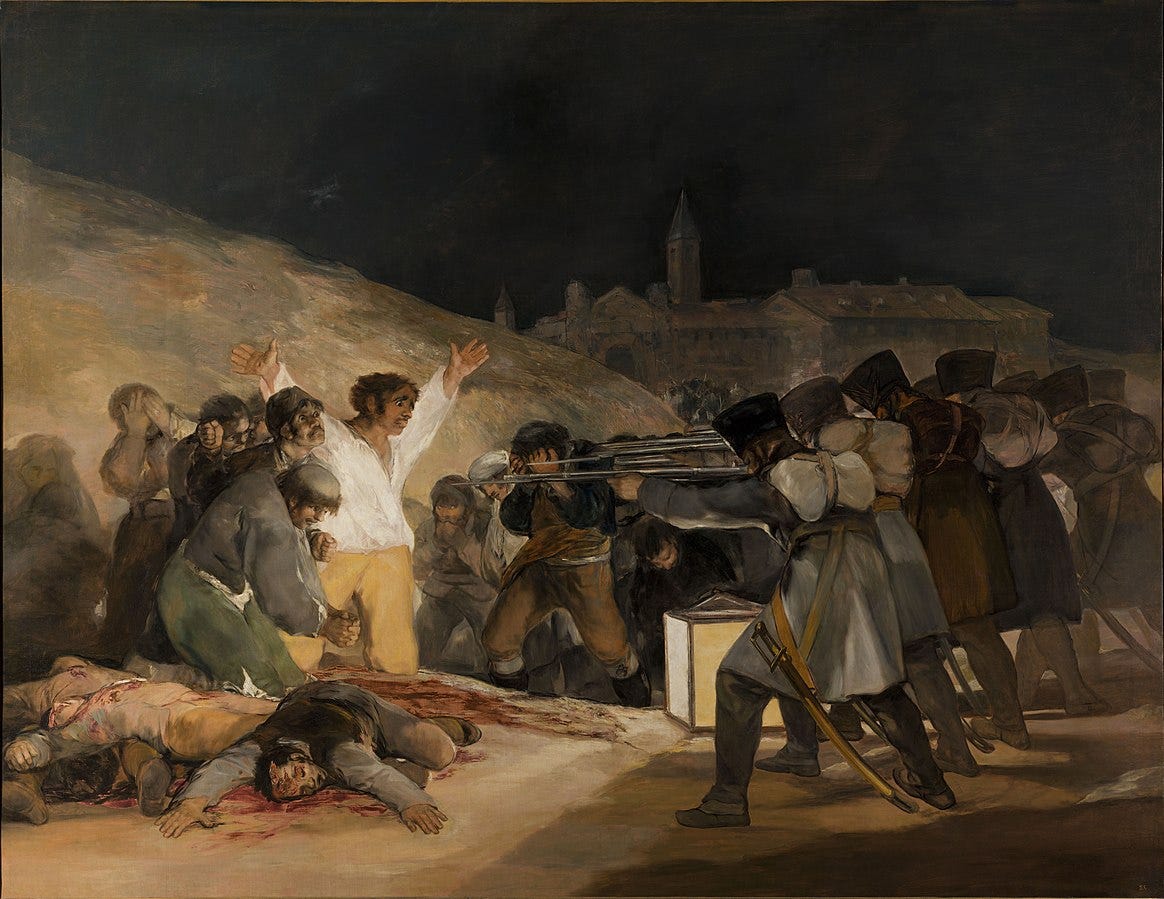
Culture Matters
The biggest mistake a society can make is to underestimate the wide ranging impact that both cultural norms and high culture - that which we hold in highest esteem - have on its people. Culture is a matter of practice, not policies. It is through culture that people influence each other and by observing culture we can understand the character of a society.
Cultural norms embody a society’s unwritten consensus on what is good, bad and acceptable. Cultural norms exist in social groups (like universities or workplaces) as well as in wider society and those norms may vary from place to place. They are the markers we hold in the back of our minds as we naturally move through life. Cultural norms emerge for all manner of reasons, which are not always easy to determine (though speculation about this is an interesting pursuit!). They create a feedback loop, a sort of societal self policing that does not need to be bound by actual laws. These norms give us structure, certainty, stability and order, so we can switch off from the many social predicaments that face us minute by minute - being the anxious social animals that we are - enabling us to get on with important functional tasks. Norms are helpful for this reason. They usually change slowly, due to the fact that they are the manifestation of a collective general consensus and, in that sense, they are conservative by nature.
Cultural norms can be influenced greatly by people in respected and powerful positions in society, such as educators, law makers and the leaders of institutions. This is why leadership matters - it matters that a society’s best people are in these influential positions and it matters that the best ideas are put forward through these people. Some ideas, be those good or bad, are easier for a society to adopt as a cultural norm than others. This is heavily dependent on the boundaries set by human nature (humanity’s shared psychological tendencies that evolved over thousands of years) and secondly by the ability of people in leadership positions to get our attention and make a convincing case.
High culture does filter down. It is completely natural for people to be aspirational and, as part of this, have a desire to climb the social ladder by following and re-enacting the preferences and behaviours of high society. We expect high culture to embody that which is most good and true - it should be the pinnacle of what is worth striving for. Society puts trust in its cultural elite to present the best to us. In turn, it is their civic duty to do so, because it affects our behaviour as we aspire to move towards it.
This is why high art matters - it matters both because it influences the aspirations of a society’s people and, at the same time, because it is a mirror for us to look into and ask ourselves if what is reflected back really does reveal what is most good and true. In the words of President John F Kennedy, “The life of the arts, far from being an interruption, a distraction, in the life of a nation, is very close to the center of a nation's purpose - and is a test of the quality of a nation's civilization.”
Bad Ideas
If, like me, you are not seeing the best high art endorsed by our cultural elite, then it should bother you, not just if you are a person who enjoys seeing Great Art, but also for the sake of society as a whole. I am going to make the case for what I think is going wrong and why. It starts with bad ideas.
If bad ideas go unchallenged in our most respected cultural institutions - universities, museums, galleries, theatres, The Arts Council, the BBC and charities like The National Trust - they begin to affect society at large. The way we, as a society and within institutions, police bad ideas is through lively debate. This is why a culture of free speech is paramount. What I mean by a culture of free speech is a general feeling in the air, an unwritten agreement between us all, that it’s fine and useful to give your opinion, whatever it might be, and that it should be received as generously as possible by the next person, with their willingness to understand what you are trying to say, in spite of any disagreement with it. The opposite of this is the general feeling that you should hold back your opinion, lest it may offend, and certainly if it dissents from what you assume (rightly or wrongly) to be the general social consensus. Another way to describe this is cancel culture, with its most significant effect not being on the lives of individuals that are subject to it, as many like to argue, but as a warning sign to everyone - this is what happens to you if you don’t toe the party line.
Bad ideas have, over time, infiltrated our cultural institutions and are now dominating. These ideas are not (yet) written into law, but rather, exist as subcultures within these institutions and in many cases have already filtered down into the culture of wider society, influencing social norms. I am writing from a British perspective, but my understanding is that the larger problems I have identified are prevalent in wider Western culture, effecting different countries in different ways depending on the structures that exist, which determine if and how these ideas manifest in practice.
What is interesting about the current situation is that, in spite of high culture filtering down to wider society, some of the bad ideas that seem to have become the general consensus in our cultural institutions have not in fact been adopted by the public at large. It seems there really is a limit to how far normal people will be swayed by ideas just because they sound intellectual, and this is particularly true when it comes to the subject of art. As such, there is currently a marked disconnect between the views of the cultural elite and a large subsection of the general public.
The bad ideas that I believe are the basis of the degradation of art and our art institutions can be reduced to three umbrella ideas: the rejection of objectivity, identity politics and safetyism. These ideas feed into each other, strengthening their individual positions and have overlapping negative effects, those being: that bad art is being made, bad art is being celebrated and exhibited and institutions are failing to do their job. My essay will focus on each of these umbrella ideas, beginning with my definition of each idea and then outlining other bad ideas that they inform and describing the resulting practical effects.
The question of where these ideas originated is for another essay and preferably not one written by me. There are contemporary thinkers who have overlapping theories in relation to this question, with postmodernism and the decadence of modern Western societies being central themes. There is also the question of how these ideas have spread so quickly in recent years, with the internet and social media being highlighted as a possible culprit.
Some good ideas still exist in the minds of people who work in cultural institutions, but when a final decision needs to be made, it is often the case that a bad idea trumps a good one. When both good and bad ideas have been used to make a decision, the negative impact may not easily be noticed. However, there is a watering down effect, which becomes more apparent over time, as the overall number of affected decisions increases. It is also worth saying that everything is a trade-off. Some ideas seem obviously good, but it should be remembered that they may stand in opposition to other seemingly good ideas. The sweet spot to be found in any trade-off is, in itself, a good idea, but it’s important to note that that sweet spot is rarely at a 50/50 split.
The Rejection of Objectivity
It would seem strange to many for me to talk about the rejection of objectivity without referring to the postmodernist theories of the deconstruction of reality, subjectivism, and relativism. However, other people are quite unaware of what postmodernist theorists said, yet do recognise these concepts when described in plain language. Talking about postmodernism is also tricky as it can be a confusing term that takes many forms. In any case, it’s the ideas themselves that matter and which I will describe.
There is a prevalent idea in the sorts of institutions that I have mentioned that traditional ways to get to the truth, like searching for evidence, should be treated as suspicious, because everything is just a matter of the perspective of the individual and individual experience is itself truth. In its extreme, this is the idea that there are no stable universal truths in the world at all, that we can’t work out what is good or bad by finding the best explanations and so we cannot apply objectivity to anything. For art, this means that there is no real and, in particular, cross-cultural consensus on what is beautiful or true and what characterises art itself, let alone Great Art.
This is a bad idea because, in short, it isn’t true. But as the rejection of objectivity itself tears down the notion of being able to argue that something is true or not (how do you argue anything if there are not parameters by which to argue it?) then my next best option is to assume that some things really are true and to tell you what happens when these things are rejected.
The effect on criticism and selection
Practically speaking, the way the rejection of objectivity affects art institutions is quite obvious - how can the best art be shown if there is no best? Moreover, how do we decide what to show in our art galleries if anything can be considered art?
With no criteria for making decisions, we have no vision at all for high art, let alone one of that which is most good and true. There cannot be a most if everything is as good as everything else. If there is no good or bad art, what use are any of our art specialists? Why would curators and others in elite positions in our public art galleries need to have training, an extensive knowledge of art history, to have spent a lifetime examining and comparing artworks, thinking and writing about art and deeply considering what Great Art is?
One of the most important criteria for identifying Great Art is craftsmanship, which we understand through objective markers. There are examples of high art that do not include this criteria, but they are limited, as, if an artist’s goal is to deconstruct, then the artwork has no meaning other than the concept of deconstruction. Once this has been achieved in any one artwork, the point has been made and any repeats of this concept are diluted.
High art ends in the creation of meaning, but it begins with great skill, attention to detail and excellence in every aspect of the creative process. There is a ‘just so’ to every part of its creation, the specifics of every element mattering in addition to that which the artist was striving for overall. To state the obvious, the ‘visual’ in visual art really matters. Debate may and should certainly be had about what is beautiful and great and the answer may not always be found by polling the majority, but exhibitions of contemporary art have strayed far from any position that aligns with the general public consensus. Without focusing on the important characteristics of beauty, skill and craftsmanship and the need for specialists who have the ability to identify these qualities, decision makers instead turn to all manner of other criteria to decide who to hire and what art to exhibit, in particular, defaulting to the second bad idea which I will discuss later - identity politics.
Other features that art galleries are paying attention to rather than focusing on aesthetic quality are concept, utility, activism, artistic process and entertainment value. These are all certainly characteristics that can apply to Great Art, but focusing on these aspects a-priori is the issue. Under the heading of concept, the main point to be made is that an idea is not art. If the art selected for exhibition is visually not up to scratch and unable to speak for itself through its own virtues, no wonder curators feel compelled to put a conceptual spin on the exhibition in order to validate their choices.
Without aesthetic quality as the leading notion in the quest to produce great art exhibitions, curators can use the opportunity to put an emphasis on their own niche conceptual or political interests and furthermore curate exhibitions that bring themselves, as curators, into the limelight. Many also use this as an opportunity to prove their virtuosity, with topics like environmental concerns and mental health awareness, which advertise their personal morality, being repeated continuously.
A quick scroll through current and recent offerings from contemporary art institutions such as London’s ICA and Serpentine galleries reveals a plethora of obscure exhibition themes with little reference to visual appearance, while Trafalgar Square’s Fourth Plinth has steadily progressed away from skilled creation to brash caricatures and explicit sentiment. If the craftsmanship of Tate’s £21000 purchase of Arrangement in Layers, Stacking Up Moments by Veronica Ryan (medium described as avocado trays, seeds, wool, cotton and metal) leaves you in confusion, you can be safely assured that the artist’s work ‘speaks to trans-generational inherited trauma, colonized definitions of mental illness and wellbeing and the dialectical relationship between the landscape of our interior and exterior worlds.’
The impact of social media has amplified the problems, with personality and politics taking precedence. Artists advertise their political views online and curators notice this. If the views align with their own, or with those of the Arts Council or DCMS, those artists are favoured. If the opposite is true, the artists are sidelined. (See more under safetyism). Galleries and curators can also use online output about exhibitions of a political nature as an effective implicit or explicit way to advertise their own views, increasing their tendency to do just that.
The artistic process and the character of an artist can be enlightening, highlighting the alchemy that results in such things of beauty and giving an understanding of the kind of person that is able to perform this magic, but when there is misalignment between an interesting person or process and the quality of the artwork produced, this focus, as a starting point, just cannot be justified. Another obvious example of this emphasis is the exhibition of work by celebrities, or substandard artists who maintain their status through celebrity. This leads on to the problem of public art galleries turning into entertainment centres.
Galleries as entertainment centres
It is a misconception that the reason publicly funded art galleries need to broaden their horizons and bring in more people, by offering ‘more than just an art gallery,’ is because of financial difficulties. Public art galleries are both funded and bound by the policies of bodies such as The Arts Council and the Department of Culture, Sport and Media. The money made available is ring-fenced for things other than the basics that one might expect. These extra expectations are, themselves, the problem - and a problem which could be rectified if the focus was returned to conserving and displaying the best art that our nation has to offer.
Whether funding bodies dictate it or galleries themselves are on board with the idea, there is a cost to providing the many other ventures that galleries are pursuing in the name of increasing visitor numbers. The push towards inclusivity, participation and education (a loose term in galleries, that can mean anything from telling people how to interpret artworks to getting people to participate in a knitting workshop) is first and foremost an ideological pursuit, allowed to take precedence by the idea that, as we have no consensus on what Great Art is, there are more important things to focus on than conserving and displaying it. There is a particular emphasis on delivering art workshops and other activities that are seen as therapeutic, to the point where the act of making art (and all sorts of other things!) by gallery visitors, seems to be confused with actual art itself. This view is strengthened by the idea that everyone can be (or is!) an artist anyway.
Money can certainly be brought in through ventures like gallery shops and cafes and I’m certainly not arguing that participation in education or artistic activities is a bad thing. It is also something that may take place in a gallery, though the only reason I can see why it should is if the activity refers directly to the artworks present. However the currant balance is all wrong. Galleries and funding bodies have not kept their eye on the ball. We see historic buildings that house our most precious national collections in disrepair, while an extortionate amount of public money is being made available for projects like the redesign of Tate Liverpool - a building that was doing the job just fine. The plans that I’ve seen smack of entertainment centre with the new ‘Art Hall’ providing ‘an exciting place to hang out. Sit, relax, sketch, take photos, do a bit of work, read, listen to a podcast or enjoy a long overdue catch up with a friend.’
Not only are non-art activities being brought into art galleries but, in recent years, it has also become popular for art galleries to deliver ‘projects’ in the community, the results of which are often then brought back into art galleries. The popularity of this notion was highlighted by the 2021 Turner Prize which featured art projects working with community groups as the shortlisted nominees, chosen for their focus on social and community-driven practices. As commendable as the work of these projects may be, the question we should be asking ourselves is, what is the value of the resulting artworks? If they are really great enough to be showcased as high art then why do we need the backstory at all?
But if objective truth is to be deconstructed then the idea of high art must also be. If no difference exists between art and entertainment, between art itself and community art ventures, between high and low art, then why should any difference be defined in the context of a public art gallery?
Now, I use the term low art for want of a better word, with high art being, as previously described, that which we hold in greatest esteem, and low art being art which is less refined, intellectual and with less meaning, yet which, in spite of the inference of the term, serves a great purpose. I am fully aware that many take exception to these terms, as there is an association with snobbery, born from the obvious fact that people in high up positions have forever profited from the barriers they create by elevating their own niche and obscure tastes to the exclusion of others. There is a relationship between high art and elitism, but this is not the whole story. Elite art, artist or art specialist should not be confused with elitism - the belief that certain persons or members of certain classes or groups deserve favoured treatment by virtue of their perceived superiority, as in intellect, social status, or financial resources. In the same vein, the virtue of fighting for what is greatest should not be denied, due to the occasions when the exclusivity this brings is exploited by nefarious actors.
It may of course be the case that an artwork that we currently categorise as low art should take up a position in the canon of high art. These arguments should certainly be made, especially by curators, using their expert opinion, but the boundary itself should still remain. Low art and entertainment serves a great purpose and it certainly has an impact on high art. Since the 20th century low art has been brought into art galleries in various contexts, with the jury still out as to whether it stands up as Great Art in each individual case.
The main point is that we should all hold a distinction in our minds. High art may be entertaining and it may also include simple aesthetic notions, but the difference is that it strives for meaning and its essential goal is to be the best ‘art’ it can be. Similarly, when thinking about what makes an artwork great, we can and should question whether our interest in the maker as a celebrity, as opposed to Great Artist is at play. High street commercial art galleries like Castle Fine Art respond to markets when they exhibit work by the likes of Billy Connolly and Bob Dylan. We expect much deeper consideration from our public art galleries, yet 2024 saw the comedian Joe Lycett’s artwork Mona Lisa Scott-Lee touring galleries including the Royal Academy and the National Portrait Gallery. On one hand this may be seen as a bit of fun, on the other, a natural progression as part of the move to position all art as high art.
In art schools
Turning to art schools as the places where we hope to see society’s great artists born, there are again obvious issues if the idea of objectivity goes amiss. Problems arise both in the recruitment of excellent students and the tuition given to those students. A belief that human beings are a blank slate, that people are more malleable than they really are, takes the focus off looking for students with innate talent and onto the idea that we can make an artist out of anyone. For many years it has been the case that the focus of teaching is on concept and theoretical studies, rather than the crafting of an artwork. Students are taught to captivate their audience with elaborate language that sounds impressive but which, instead, has the ‘emperor's new clothes’ effect, a problem which has become so blatantly obvious that artists of all persuasions speak freely about it.
The emphasis on theory means that tutors themselves do not need to have excellent practical skills and knowledge. It is even thought that the tutors don’t actually have to teach and, in some institutions, that this is to be encouraged! Conversely, as theoretical specialists, the current cohort of tutors is more likely to further embed the concept of rejecting objectivity, perhaps more so if they are insecure about their skills-based inadequacies. Frustrated graduates have for years been saying that they were taught nothing at art school, but yet nothing ever changes.
There is also the issue of art schools behaving more like businesses than institutions that care about human capital. Although this is not itself down to a lack of objectivity (also see safetyism), it is convenient not to have objective criteria with which to judge potential students if you want to bring as many people as possible through your doors.
Art writing
When it comes to art publications, in particular those funded by Arts Council England, there is a notable sway towards art writing that is descriptive rather than that which critiques art. Instead of plain-speaking reviews of exhibitions, giving judgement and good explanation for the arguments being made, the tone has shifted to writing that either describes the artwork, the concept behind it, or the experiences and identity characteristics of the artist. The fact that judgement does not take place can be related to identity politics and safetyism, as argued below, but, fundamentally, it is allowed to happen because of the overriding belief that we cannot judge art, because there are no real objective criteria by which it can be judged in the first place and therefore we can only either describe it or talk about it in other ways.
Identity Politics
Again with a basis in Postmodernist theory, identity politics asserts that a person’s identity is of great relevance when it comes to their experience of the world. A specific set of identity characteristics should be considered when making any decisions of consequence. The ideology perceives traditional majority identities as oppressors and minorities as oppressed. The assumption is that traditional structures of power - in practical terms this would mean our cultural institutions - are having an adverse effect on people who have certain identity characteristics by either actively or passively overlooking them and, therefore, these structures of power must be ‘deconstructed’. These people are viewed as ‘marginalised’, due to historic crimes against people with their characteristics and to biases that remain embedded in individuals and institutions. This is examined with a focus on historic and current disparities in outcomes for these groups. The concept is that, in order to compensate for this, rather than disregarding individual or group identity, when making decisions of any consequence, we should consciously focus on it.
The effect on criticism and selection
As already noted, the rejection of craftsmanship and beauty makes it easier to bring in other concepts, like identity politics, as a substitute. However, identity politics is such a strong concept in our institutions that even when the quality of an artwork is being taken into account, the artist themselves, or the function of the artwork as a tool for change, is what matters most - the argument being that art for art’s sake is just not enough and that art should also have utility. The curation of works related to identity characteristics is intentional activism and the tendency is to choose artists not only because of their identity, but also because they make art about identity - in particular, their experience of being marginalised.
With activism taking top priority, the ‘message’ of the artwork, and of course the fact that it is virtuous, is more important than the artwork itself. It is often said that gallery visitors are being ‘educated’ through the art on show. It is a conscious act of social engineering but whether this approach is working or not is another question altogether. I think it is unlikely. People don’t go to art galleries to be told what to think or feel and they are even more adverse to blatant manipulation. The idea that the general public will actively search out exhibitions like this shows a complete misunderstanding of human nature, but this is no surprise when institutions reject the very idea.
Of course identity politics works in reverse in galleries as well, with an attack on the ‘straight white man’ whose art has dominated art galleries throughout history. In order to right perceived or real mistakes of the past, there is a drive to exhibit artworks by anyone else. In the case of the Fitzwilliam Museum in Cambridge, a whole rehang of five painting galleries was recently undertaken to tell the ‘larger, more complex and inclusive story of art’ with thematic as opposed to chronological displays with particular emphasis on women and artists of colour.
Again, emphasis is taken off the quality of the artwork itself and onto the person who made it. Moreover, when artists do make work relating to a political issue, their own ‘lived experience’ is seen to be highly relevant in determining whether the artist should even be exploring the idea. The decision to show an artwork is not based on how well it might enable a viewer to think or feel but, rather, whether the artist who made it has experienced the issue themselves because of their identity characteristics. A new expert class of both artists and art professionals is emerging, with the revised entry requirement being the person’s ‘positionality’ as black, trans, queer, a woman etc. This drives down the quality of work because value is bestowed based on the ideology and immutable characteristics of the creator, not the work created.
A quick scroll through future planned, current and recent exhibitions from galleries such as The Whitworth in Manchester, Nottingham Contemporary and Bristol’s Spike Island illustrates the extent of exhibitions that relate to identity politics by choice of artist or exhibition theme. The current Spike Island exhibition Grey Unpleasant Land, a collaborative exhibition by artists Sophia Al-Maria and Lydia Ourahmane is a typical offering. Its description reads: ‘Produced over the course of two years, the exhibition addresses the elephant in the room. As immigrants to the UK, Al-Maria and Ourahmane delve into the “grey areas” of England’s narrative, critically re-examining the stories that have been told - and continue to be told—about origins and belonging.’
The effect on artists
In pursuit of success and status, artists naturally respond to the demands and tastes of institutions’ leaders and decision makers, these being the gatekeepers of what gets shown in prestigious public art galleries. Identity politics pushes artists to gain publicity and status by focusing heavily on their own identity characteristics and pushing hard on the elements of that which categorises them as victims in the perceived hierarchy of power. Curators’ preferences and criteria set by the Arts Council’s ‘Let’s Create’ policy influence artists to focus heavily on the creation of activism art. This produces a feedback loop that is deadly to the advancement of Great Art, where the increase in production of this kind of art is seen as evidence of its validity and then curators are strengthened in their conviction to show it.
It is obvious that artists should focus on making the best art they can. Of course, we all know that this can be a difficult job for anyone who wants success, be that commercially or via the approval of cultural elites. Artists, like anyone else, have competing internal goals and can be swayed off course, depending on their ability and will to focus on the matter at hand. They can be actively encouraged, either to think freely or to respond to the demands of the institutions.
In institutions
When the concept of identity politics becomes embedded in our cultural institutions it starts to be seen as a non-political issue. This has happened in spite of the fact that, as has been shown through public polling and general elections, identity politics does not have mainstream consensus. When appointing the best person for the task at hand, to roles from senior leadership to housekeeping, identity politics counts to the people making these decisions. A potential employee’s identity characteristics count and what they think about identity politics counts, reaffirming the idea through a feedback loop. In an interesting spectacle, in an attempt to be the person with the greatest claim to promotion, employees will try to outdo each other by putting more emphasis on any identity characteristics that give them traction and less on the ones that don’t, or by projecting more and more radical ideas that make them look yet more switched on than their already progressive colleagues. The same can also be said for artists grappling for exposure and opportunities that galleries offer. The institutions become vulnerable to hustlers from all ends.
Bureaucracy
Identity politics is also a bureaucratic headache. The impact it has on all sorts of decision making impedes staff time and the institution’s resources, including funding, via unnecessary policy writing and implementation, training programmes, demographic monitoring and PR and marketing work. Identity politics feeds into safetyism, the impact of which is discussed below.
Audiences
Identity politics influences galleries’ approach to the public with resources pushed towards reducing disparities between the identity characteristics of people who visit galleries and those who don’t. These resources don’t come for free. Everything is a trade-off and one obsession only takes away from another. I’m all for galleries encouraging people to see Great Art, but the art itself should be the galleries’ main agenda and there is an assumption being made that everyone ‘should’ see and enjoy high art.
Now, many of those who do, in fact, understand that plenty of people prefer to spend their time consuming low art, pose the argument that those genres should be brought into art galleries. However, this entirely misses the point. Society’s most prestigious public art galleries are the home of high art - defined in the way I already have and for reasons I have already given. Of course a society may decide to allocate public money to places where low art is shown, or take all money away from public art galleries in their entirety. There are incredibly interesting arguments to be had on all sides but the answer has nothing to do with my argument which is instead about the use of public money allocated for one thing being used for something else.
The focus has been taken entirely off what it means to really experience Great Art and, rather, a bums-on-seats approach is taken to measuring a gallery’s worth. In many cases, the gallery records it as a positive in the name of art ‘reaching’ more people if you just used the loos or cafe. In other cases, visitor numbers per se are not interesting to galleries, but rather the proportion of certain identity groups that feature within those numbers. As mentioned in the description of identity politics, it is assumed that disparities are evidence of structures of oppression or, in any case, something that needs to be fixed.
Art about identity
As an end note on this topic, I would like, briefly, to make the case against art about identity, although even if you are a fan of this kind of art, I don’t believe that it matters with regards to the wider points I have made. Great Art is an exploration of themes that are tied to our human experience - love, truth about the physical world, beauty, family, home, country, mortality. These are all universal themes which ground us and they are about something bigger than any one of us as an individual. A focus on identity itself is unstable because it is specific to the individual. Great Art is something that people feel deeply about and it is difficult to make that deep connection through something so subjective.
Safetyism
Safetyism refers to a cultural phenomenon or mindset characterised by an excessive focus on safety and the avoidance of risk, often to the point of limiting personal freedoms, resilience, or exposure to potentially beneficial challenges. Safetyism emphasises physical, emotional or psychological safety to such an extent that even minor risks or discomforts are viewed as unacceptable. Examples include the use of trigger warnings, or the creation of ‘safe spaces’ designed to shield individuals from uncomfortable or controversial ideas. Within institutions, there is also an emphasis on limiting reputational harm. Safetyism reflects a broader cultural shift in wider society where people have become increasingly averse to risk and vulnerability and it should be noted that institutions may be limited by government legislation, in particular with regards to health and safety requirements. It would be ridiculous to say that we shouldn’t weigh up risk, but safetyism takes risk aversion to an extreme, beyond the trade-off that serves us best. Safetyism has a relationship with identity politics in particular as, through this lens, people who are seen as marginalised because of having certain identity characteristics are also seen as in need of greater protection.
The effect on art criticism
The idea of being kind may, on the surface, seem nice, but it’s a simple idea that often ignores the greater good that comes with honest criticism. In pursuit of Great Art, negative critiques must take place. There is no progress without honesty, however emotionally painful it may feel, and it is worth remembering that negative critique does not need to attack the artist personally - only the artwork itself. It is also worth noting that there seems to be confusion over the notions of being judgmental (an adjective that describes a person's tendency or attitude toward making judgements) and passing judgement (a verb phrase that describes the action of making a judgement about someone or something.)
Any artist who puts emotion, time and energy into making a work of art will naturally feel hurt by a negative review. There is discomfort in the process of being critiqued, but the benefits for Great Art, and also for the artist concerned, hugely outweigh the negatives. Yet, in recent years, art criticism has seemingly morphed into what can only be described as art description. Reviews of exhibitions still, of course, exist in magazines and newspapers, including mainstream publications such as The Guardian and The Telegraph, but within art institutions, academia and state-funded art publications, the culture is rather different.
So called ‘art writing’ has been taken up by academics as a respected way to theorise and write about art in a descriptive manner without giving any explicit opinion. The ‘art criticism’ in most art publications tells you about the artist (usually focusing on any of their apparently relevant identity characteristics), about the ideas behind the artwork, about any ideas that sort of relate to the artwork (in all manner of tenuous ways), about some opinion that the critic has on some topic (usually political) that relates to the artwork and, sometimes, there is, finally, a judgement… but only if it is a positive one. For this reason, artworks and exhibitions that are not conceptual enough to theorise about, or those which have a political edge that goes against the received wisdom of the cultural elites, often go unreviewed.
Writing for ArtReview, Adeline Chia’s recent review of Natasha Tontey: Of Monkeys and Men at MACAN, Indonesia, is a typical example of this style of writing, presenting a description of the artworks and what the exhibition attempts to do, with a bit of analysis, a sprinkling of creative writing about the artworks, but no real indication of whether Chia herself felt the exhibition was a success or not. Not wanting to single Chia out in particular, ArtReview’s ‘reviews’ are ironically more often than not written to this formula.
When a negative review is called for, if the artist is deemed to be marginalised because of identity characteristics they possess, or if the artwork itself is seen as virtuous, relating to a favourite cause of the art elite (climate change, trans activism, promoting women artists, for example) critics will just avoid writing the review in the first place. The fear of honestly critiquing an exhibition like this is amplified by the existence of social media and the prospect of being torn apart by an angry mob. This doesn’t affect every critic, but it certainly is one more thing to stop a person from bothering. It’s much easier on the emotions to publish a ‘nice’ review about an exhibition that highlights a virtuous cause, right?
This lack of honest critique is arguably not just because of safetyism - the wish to save heartache for the artist and public condemnation for the critic is amplified by the rejection of objectivity as previously outlined - if there is no such thing as good or bad art, what is the point in critiquing anything?
In art schools
This aversion to passing judgement, so as not to offend, has also been taken up by tutors in art schools - the exact place where judgement is needed most. With art schools operating more like businesses and pressure from students to be given a qualification and a high mark, based purely on their payment of fees and attendance on the course, plus the fear of students’ complaints being upheld by the art school, tutors have little incentive to tell students that their work is substandard. To validate this behaviour further, the prevalent concept of rejecting objectivity is a great excuse to refrain from judgement. This infantilisation of students means that they are coming out of art school thinking they have produced great work when they haven’t and without being given the chance to improve, as they are not being told where they are going wrong in the first place.
This is not to mention the clear reality that many students who have been accepted into art school in the first place do not have the talent to excel in a career in the arts. It’s a tough, winner-takes-all game that requires talent and dedication, but young people are not being told this honestly and, instead, a student’s capability is implied through selection onto the course. Part of this is about being ‘kind’ to people, the idea that ‘everyone should go to art school’, but how kind is it to set people up to fail? Many tutors are tired of teaching substandard students. It creates an atmosphere of cynicism and, with the bar so low, everyone relaxes into a state of complacency, rather than what should be an exciting and inspirational coming together of the nation’s best and brightest.
In Institutions
A climate of anxiety
There is what I can only describe as a climate of anxiety in art institutions. Because they are so sensitive to criticism from their own staff and from the public, decisions are made on the basis of alleviating anxiety and limiting bad press, as opposed to focusing on what is best for the operations and mission of the organisation. Paradoxically, this approach often includes a strange act of self flagellation, performed to pay penance for the institution’s apparent role in historical crimes against marginalised people (see identity politics). This perpetual state of guilt coupled with reactive decision making, aimed at ending denunciation from angry mobs, results in institutions tying themselves up in knots, publicly U-turning on decisions or giving dishonest explanations, rather than making confident, well thought out, coherent and consistent decisions that they can stand by. This delays pain in the short run only to make things ten times worse in the long run.
Perhaps the most obvious example of a case like this is Tate Britain’s handling of criticism in 2020 about the Rex Whistler mural, The Expedition in Pursuit of Rare Meats, housed in its restaurant. Although the mural had been displayed for almost a century and lovingly restored in 2013, with Tate well aware of the images depicted, at this time Tate’s management rushed into action, proclaiming it as offensive and closing down the restaurant. It then took until February 2022 to consult with ‘voices from outside Tate’ to decide how to proceed and finally in 2024 a new commissioned film that seeks to contextualise the mural was unveiled. In spite of this drawn out process, we are still unaware of what Rex Whistler’s feelings and intentions were when he painted those images. However, this valuable point and the wider meaning which can be drawn from it will be forever lost in the cloud of hot air created by the angry mob that denounced the mural and Tate’s subsequent capitulation.
Safetyism is reactive, not proactive and institutions default to safetyism when good leaders are not present. When unassertive, fearful leaders are in position, the institution’s management class take control by default. These people, who may be good administrators and are often also good at learning the correct lingo and fitting in with the expectations of the culture around them, are generally not good leaders with a vision. Their focus is on HR and PR and rarely prioritises the creation and display of Great Art. Because HR and PR are now so highly valued in institutions, with Great Art becoming a secondary consideration, senior leaders are more often recruited for their HR and PR sensibilities. This may be a good fit if art galleries were actually entertainment centres, but, as we have already established, they are not and what is really required is someone at the top who cares deeply about Art.
As I will describe later, when bureaucracy is so heavy and so much control is in the hands of a management class anyway, it easily allows for a takeover by people who either have their own agenda or are just not that interested. This managerial class is making decisions that specialists and directors once made. They choose the easiest, safest options or barriers are put in by design to avoid having to make decisions at all. The alternative - considering something more risky that may be difficult to achieve, or entering into unknown territory - could result in something incredible, and yes, it may also be a dramatic failure, but no one did anything truly incredible without taking risks. The right answer about whether to take a risk or not is very specific to the situation and this is what specialists are for and why they should be making these decisions, not a management class that will treat everything with a broad brush.
Organisations are run by people and if these people are cautiously rather than assertively managed, this has an impact on the organisation’s efficiency and overall ability to carry out its objectives. Managers in art galleries suffer from the same problem as tutors in art schools, being unable to manage staff effectively even when they have the will to do so. With a senior leadership that can’t stand to see people fired even HR departments and managers who are not complacent or fearful are reluctant to discipline staff whose work is not up to scratch. Bad managers stay in post and end up managing other bad managers. Staffing problems cause a ripple effect into so many areas of the effective running of an organisation.
Bureaucracy
Risk aversion leads to bureaucracy because organisations create additional layers of procedures and controls that are, in theory, designed to minimise mistakes and harm. While measures like these can be important - for instance, to protect valuable works of art from damage - they are often applied across the board without consideration for what is worth focusing on and should take priority. These procedures take up time and resources but there is always a trade-off.
Much of the potential harm that institutions are trying to minimise is not related to protecting artworks or to the physical safety of staff and the public, but instead it’s about psychological welfare and mainly directed at staff. Of course, it is good to have a healthy and happy staff team, but how much responsibility any organisation should take for the personal welfare of its employees should always be debated. When the emphasis is taken off employees taking personal responsibility for their own welfare, the expectation develops that they should be looked after by their employer in all sorts of ways. In this type of culture, when a member of staff is legitimately being disciplined for substandard work, there is a natural tendency for them to default to victim status, exaggerating their personal hardships for effect. In a culture of victimhood, how do you know you are dealing with a genuine case? Again, there is a balance to be had when it comes to supporting employees, but my point is that the balance is so wrong that it has become one of the main issues managers are dealing with in their roles.
Institutions are defaulting to ideas about providing ‘mental health support’ although, for many of the ‘support mechanisms’ they adopt, there is very little evidence that these have any impact at all. Money, time and resources are spent on all kinds of ‘nice ideas’ that look and sound good but are often more about elevating the institution’s profile than getting tangible results.
There is untold bureaucracy tied up in the HR processes needed to manage bad staff, in combination with the effect that bad staff have on operational processes. Staff who do not have the institution’s best interests at heart will not work efficiently or monitor unnecessary spending well. They will not see systems that stand in the way of smooth operations and appeal to change them. Many staff positions in institutions rely on bureaucracy. Why would any person in one of these roles try to do themselves out of a job? The result is a machine with an unnecessary number of levers, switches, and dials and, importantly, most of its operators don’t care.
Institutions have huge budgets and still not enough money to cover all the things that they say they need to fund. The fear of radically overhauling old dysfunctional systems is too strong in these institutions. It requires leaders to be brave and know that reforms might fail but are worth the risk. As humans, we can all be stuck in our ways and we can recognise that we do this for self-protection. These institutions are staffed by people who are just acting naturally. People in leadership roles need to be encouraged to take risks and shake things up, to push staff out of their comfort zone, have high expectations and respond to people who are not delivering in their role.
The effect on curatorial decisions
Curatorial decisions need to be made carefully and are often limited by practical concerns, like the potential for damage to historical artworks when in transit - an example of a risk that is worth taking into account. On the other hand, many of the decisions being made about what art to exhibit and what exhibitions to programme are heavily risk-averse for no good reason. Galleries are obsessed with their reputation and branding. They care whether an artist is the right ‘fit’ for the gallery in relation to their personality and artwork. There is an obsession with coming across as virtuous by promoting ‘the right ideas’ within the gallery. These are ideas that are seen as ‘on the left’ of the political spectrum. Apart from the fact that an art gallery does not exist to tell us what the right ideas are, this theory for programming means that great art and great artists whose ideas are not seen as virtuous by that gallery are sidelined.
Galleries will certainly exhibit art about political issues that split opinion, but only if the inferred opinion is in line with the status quo in the art establishment. This is not risk-taking at all, it just feigns controversy. Galleries are not signalling their virtue to the public at large, they are signalling it to their own people. The Barbican’s 2024 exhibition Unravel: The Power and Politics of Textiles in Art is a textbook example of this kind of safe-edgy exhibition with its predictable ‘structures of power’ narrative. As described, the exhibited artists “explored the transformative and subversive potential of textiles, harnessing the medium to ask charged questions about power: who holds it, and how can it be challenged and reclaimed?”
When public galleries have to exhibit work by artists who have ideas or opinions they don’t like (this often happens with historical works of art, for instance), they often mitigate this with a safety warning (telling the viewer that the art that they are about to see might offend them) and/or a panel of information that makes it clear that the ideas that the artist or artwork might be promoting are not ‘good’ ideas. While warnings may sometimes be necessary, for instance when images may not be suitable for children, their use is an unnecessary distraction in the context of an art gallery. Alongside warnings, there is undue hassle for gallery staff, caused by the anxiety-laden consideration and production of information panels that carefully control messaging. This is the kind of climate of anxiety that influences a curator to decide it would be easier just not to bother exhibiting the artwork, even more so if any wrong move could also result in a PR nightmare for the gallery. Because of this, Great Art will be ignored and missed.
Aside from this, many gallery visitors find it patronising and therefore off-putting when trying to appreciate the art on their own terms. While people often like to know more about artists and works of art through additional information, which can be made available in a number of ways, most people do not like to be told what to think about the artwork or the artist and whether the artist’s opinions and ideas were moral or not. Tate Britain’s 2021/22 exhibition Hogarth and Europe has been highlighted in particular for preachy text panels that annoyed visitors and critics alike.
Nannying via public art galleries
A strange state of affairs has occurred in the last two decades, which I diagnose as part of the safetyism problem. Not only is the public being told what to think when they visit art exhibitions, they are also being told that they should visit art exhibitions - that it is good for them. In the introduction to Arts Council England’s ‘Let’s Create’ 10-year Strategy launched in 2020, ACE Chair Sir Nicolas Serota crystalises the organisation’s priorities to ‘value the creative potential in each of us, provide communities in every corner of the country with more opportunities to enjoy culture, and celebrate greatness of every kind.’ He goes on to site the main challenges of the next decade as: inequality of wealth and of opportunity, social isolation, mental ill-health, and above all of these, the accelerating climate emergency, and says that creativity and culture have a particular role to play in response to these.
You will remember that the premise of this essay is the idea that high culture matters to society, but this does not mean that every individual will get something out of visiting art exhibitions. However, it really does seem that art is being delivered as part of a wider project, that of the state looking after people. I’ve already mentioned the emphasis that public art galleries put on delivering art workshops as therapy and encouraging ‘participation’. These preoccupations are down to the safetyist idea that people need to be cared for.
A more cynical conclusion would be that the state wants to control the way people think through the culture that it produces via art institutions, which is less about safetyism and more about some sort of ideological indoctrination. My objection to this view is that it gives far too much credit to governments for being in control of art institutions, The Arts Council and even its own Department of Culture Media and Sport. It is exactly the fact that successive Labour, Conservative and coalition governments have not changed the course of these institutions, which proves that this problem is not down to state control at all - rather, lack of state control. It is complacency, a lack of vision and drive for change and a fear of taking the risk of reform. The state, with all its bureaucracy and outsourcing of responsibility to quangos like The Arts Council, is another example of a huge machine with an unnecessary number of levers, switches and dials, and the government isn’t in control of it.
With responsibility and a lot of public money passed over to The Arts Council and the DCMS, the people running these bodies, who were not elected to govern, are making decisions that affect our culture dramatically. The ideas that we are seeing so strongly reflected in the UK’s art institutions, which include identity politics, safetyism and the rejection of objectivity, are the strongly held beliefs of this managerial class. How these beliefs came to be so strongly held by people in these positions is an interesting question but for another essay. My point is that, if the bureaucracy that safetyism demands was not there, these people would be out of a job and their beliefs would be inconsequential.
Practical issues for artists
Artists who are not affiliated with institutions are able (if willing) to be more maverick and are, certainly, less bound by professionalism and the sort of regulations that employees must adhere to, so this freedom should, in theory, allow them to concentrate on the task of making art. Artists can, and do, find alternative places to gather together and exhibit their work while staying independent from established institutions. For instance, they can often make use of unoccupied buildings that are unwanted by most other people. This, however, still requires them to contend with state-imposed safety regulations, which have become increasingly restrictive in recent years.
Gone are the days when an artist collective could go crazy with a huge, precariously constructed experimental installation in a decrepit old shop unit owned by someone’s uncle, or set up studios in a freezing cold warehouse with holes in the floor and dodgy electrics with a landlord who would prefer a bit of cash than no tenant at all. Nowadays, for any group to occupy a building, multiple risk assessments, fire safety controls and added insurance are required. This, along with commercial or industrial letting regulations, is also a consideration for the philanthropic building owner who, in the past, was more relaxed about lending a vacant building to a group of enthusiastic artists and, of course, the dodgy landlord who’d be willing to reduce the rent for the sake of not having to do repairs.
It’s not obvious that the trade-off here is so bad, as it’s worth thinking about the potential life-threatening consequences of these kinds of activities. It may also be a case of looking at the past through rose-tinted spectacles. However, these modern safety requirements do hinder artists who want to find buildings for making and exhibiting art but do not have the skills, confidence or will to deal with the bureaucracy. I am cautious about putting too much emphasis on artists needing to have things handed to them on a plate. I’m not sure that artists have ever been helped by this approach and it’s hard to decide who deserves the handouts in the first place, but restricting artists (or anybody for that matter) is another thing. How much this lost liberty for artists actually affects the production of Great Art is hard to know as it’s difficult to measure that which did not happen. My suspicion is that it does make a difference, in the same way that it makes a difference if you over-regulate any small business - things just don't get off the ground. People say artists need more money, but I would suggest that they just need more freedom to self-organise and this will naturally require buildings in which to do it.
Freedom of expression
There's another way in which safetyism is influencing artists for the worst. You would expect artists all to agree that freedom of expression is paramount to the production of Great Art; however there has been a shocking about-turn on this logic in the minds of the art establishment in recent years. The new prevailing theory is that people need protecting from being offended and in particular, people from the so-called marginalised groups that I've already mentioned under 'identity politics'. Even more surprisingly, it's the younger generations that are most keen on pushing this idea, a situation that has left older generations quite baffled.
The idea that emotional or psychological safety are paramount has become popular, particularly in art schools and universities, and this has even been taken to the extreme of describing words as violence. The discomfort of hearing uncomfortable or controversial ideas has become unacceptable and, to make things worse, if this is a bad idea (and I believe it is) then the idea itself reinforces the prohibition of pushback against it. There is an authoritarian policing of language, led by students themselves, which is rife in academic environments and can also be found on social media. The term ‘cancellation’ is often used to describe the most erroneous cases of this policing. As much as it might destroy the life of the person being cancelled, its effect is amplified in the wider environment, where it serves as a warning to anyone thinking of not toeing the party line.
Students and young artists have even begun to claim that criticism of their artwork is harming them, but this is no surprise when art schools and universities are refraining from having difficult conversations with students and doing nothing to initiate the valuable process of receiving and responding to criticism. It is exactly this criticism from others and, even more so, criticism that any great artist imposes on themselves, which leads to Great Art.
And then there are those artists who have controversial ideas, who naturally want to push boundaries (because that’s what artists do), whose politics are on the ‘wrong side’ or who have all sorts of opinions that don’t fit into any box, who don’t even know what they think and want to try to work it out through art, and there are artists who make work that is seen as grotesque, unsavoury, frightening, sexualised or shocking and which brings out our darkest emotions. Not all of this art should be put on a pedestal - a lot of it is just not very good, but safetyism tells artists that it should never be made. History testifies that man’s greatest achievements came from the freedom to think freely and innovate, revealing the fine line between genius and insanity at the greatest points of breakthrough. Most artists may simply be a bit insane, but if you limit them all with a broad brush our genius will never reveal themselves.
If these artists are not already being sidelined, most of them are self-censoring and often without even knowing it. Self-censorship is arguably a far bigger problem than the act of institutions and others de-platforming people with the ‘wrong’ views. The pressure not to offend certain categories of people undoubtedly drip feeds into the minds of artists. Whereas, previously, many artists were not really thinking in political ways when they were making art or talking about art, now we are living in a hyper-politicised world where artist and audience obsess over the ‘message’ of the artwork. This has caused everyone to be oversensitive about the real meaning behind any statement or observation. Artists have become self-conscious and a concern about bad faith actors taking what they say and using it to shun them discourages them from expressing their thoughts, in order to sort them out and think them through.
Safetyism causes anxiety over uncertainty, leading us to attempt to ground every artwork into a specific narrative or wider ideological message. This means trouble for one of art’s greatest assets - the ability to express truth regardless of its implications. Artists reveal and re-present the world. They draw attention to what they think is notable, but there is no requirement to have a personal stance or dictate solutions to the world’s problems. The greatest art is open-ended. Our political framing of apolitical art narrows our view of it, and art that is intentionally created as overtly political will always be parochial and will never result in the greatest art, because it is naturally closed-ended.
Because people are scared of crossing a line that will lead to social punishment, they are less open for discussion, free and out-of-the-box thinking, risk-taking and boundary-pushing. These are bad conditions for the conception of Great Art. For artists, every image represented is considered in relation to how it may or may not associate with the acceptable narrative. Every time an artist talks about their work they wonder how it might be perceived in the wider political context. The idea of what might be said on social media about you or your art festers in the background. The pressure to conform taps away and layer upon layer of small decisions are affected, amounting to a very different work of art than might otherwise have been made. The art becomes self-conscious, dull or, at worst, it just doesn’t happen at all.
What now?
For some, this essay might sound a bit dramatic. Is Great Art really in crisis? Much of what I have described here is a trajectory which might correct its course when people start to recognise it has gone too far. Perhaps this is true but, without anyone coming forward to ring the alarm bell, it is less likely.
This essay has particularly drawn attention to art institutions, many of which are funded partly or wholly by the state. The huge influence that institutions have on artists is what we should be paying attention to here. Rightly or wrongly, artists look up to institutions and think of gaining their recognition as the ultimate marker of prestige. One way to help artists wake up from their obsessions with identity politics, safetyism and the rejection of objectivity is to remove the opportunity for them to fraternise with institutions and encourage them to fend (and think!) for themselves. There are other ways the state can support artists without interfering so heavily, as they can with any other grassroots community group - by providing buildings and nothing more. This encourages self-directed voluntary activity, where average people are involved and in control, as opposed to the current situation where the same people are passively directed by an authority.
For the big issue of identity politics, a public that has toyed with the idea and realised its failings can begin to disregard it more easily than the art institutions who have invested so much of their current structure in this ideology. Many believe that a public rejection of this idea is already having an impact, although I would caution the assumption that the public have wholly rejected it, in particular when examining the Gen Z age group, and remind you that our future lies in the hands of the younger generations. What evidence is there that institutions will take it upon themselves to respond to public opinion? Independent organisations with bad ideas are integrated with markets and will naturally fail if they do not deliver something that the public wants, but art institutions propped up by public money do not have the same incentive to adjust.
Many people who are switched on to the problems that I’ve outlined in my essay say that the demise of the art institutions can’t happen soon enough. But is the wish to tear institutions down not just another symptom of postmodernist thought - the idea that traditional structures of power are inherently bad and should be deconstructed? In any case, it’s a pretty lazy solution. There is, however, an argument that is based less on the destruction of institutions and more on the removal of the state funding that props them up. In the case of many galleries and institutions I would agree, they just need to go, but certainly not all. A broad brush approach leaves us at risk of throwing the baby out with the bathwater. Unless you are a radical libertarian who believes we should have no state at all, you must agree that there should be a concession for the basics to remain and be preserved. For this we need museums and galleries.
Like it or not, Great Art is naturally tied up with history and heritage. In that respect, art galleries embody who we are and symbolically hold a nation together. Institutions themselves are history and, as with Great Art itself, art institutions exemplify what we hold in highest esteem and, importantly, the path we have followed to get to this point. As difficult as it might be to decide what art should be collected, preserved and put on show, there is still a lot to be said for making our best guess and doing everything we can to get the conditions for that right. Institutions matter because civilisation matters. People seem to have lost the ability to imagine a world that is not civilised, where we cannot take law and order for granted. Now, more than ever, do we need to be constantly reminded of what we have achieved.
It is a necessary element of institutions to have people in authority and it is appropriate for us to assume that these specialists know their field. Relying on authority can produce errors, but the alternative is a stab in the dark. The problem we are dealing with in this moment is largely about trust. We’ve lost trust in our art institutions because they are peddling bad ideas and are not employing the best people. It is possible to return to a good functioning state and regain that trust, but this does require governments to make radical changes, instilling a back to basics approach in our most valuable art institutions. It would be better still if these institutions would only reform themselves. As I’ve already said, I’m unsure of their will to do so, based on the beliefs of the individuals who work within them. As far as I can tell, the public are voting with their feet and you’d think the art institutions would pay attention to this and wonder what they’re doing wrong, but this would not be the first time bad ideas have gripped a small, influential part of a nation when most average folk feel quite differently.
Throughout history, great artists have managed to emerge and create masterpieces, independent from institutions and against the backdrop of dark times. I should also be careful to catch myself engaging in the doom-thinking that perpetuates safetyism - perhaps things are not so dark right now - they could definitely be much worse. For instance, when it comes to issues around free speech, we do, at least for now, have laws that protect us. I am optimistic in this respect, because it is artists - individuals - that we are ultimately relying upon to continue to produce Great Art, regardless of any societal structure that should be supporting that. One thing is for sure about great artists who have emerged throughout history. They have an incessant urge, a real stubbornness, to do whatever it is they have set their minds upon, to paint that forbidden picture that is plaguing their thoughts or make that ridiculous construction the point of which they can’t explain. Though I do not wish it, if the collapse of institutions is destined, then our last hope lies in artists and their relentless impulse to create what they must.
Not sure why but I re-read this again today. I sense your frustration with the current state of things in the visual arts but you write as if it all went pear-shaped in about 1850! Do you really believe that there are objective standards for Great Art? If so, what are they, other than “craftsmanship”? Would Duchamp make the cut? I see a lot of exhibitions (at least one a week) and I can’t remember the last one where I felt cheated or fobbed off. Do you want to turn the clock back? If so, when was art “good” in your opinion? Lots of this sounds like sour grapes I’m afraid.